How ChatGPT Ads Work (And How Businesses Can Use Them to Acquire Customers)
A clear breakdown of how ChatGPT Ads work, where they appear, and how businesses can use them to acquire high-intent customers more efficiently.
Conversation Infrastructure
9 Mins Read
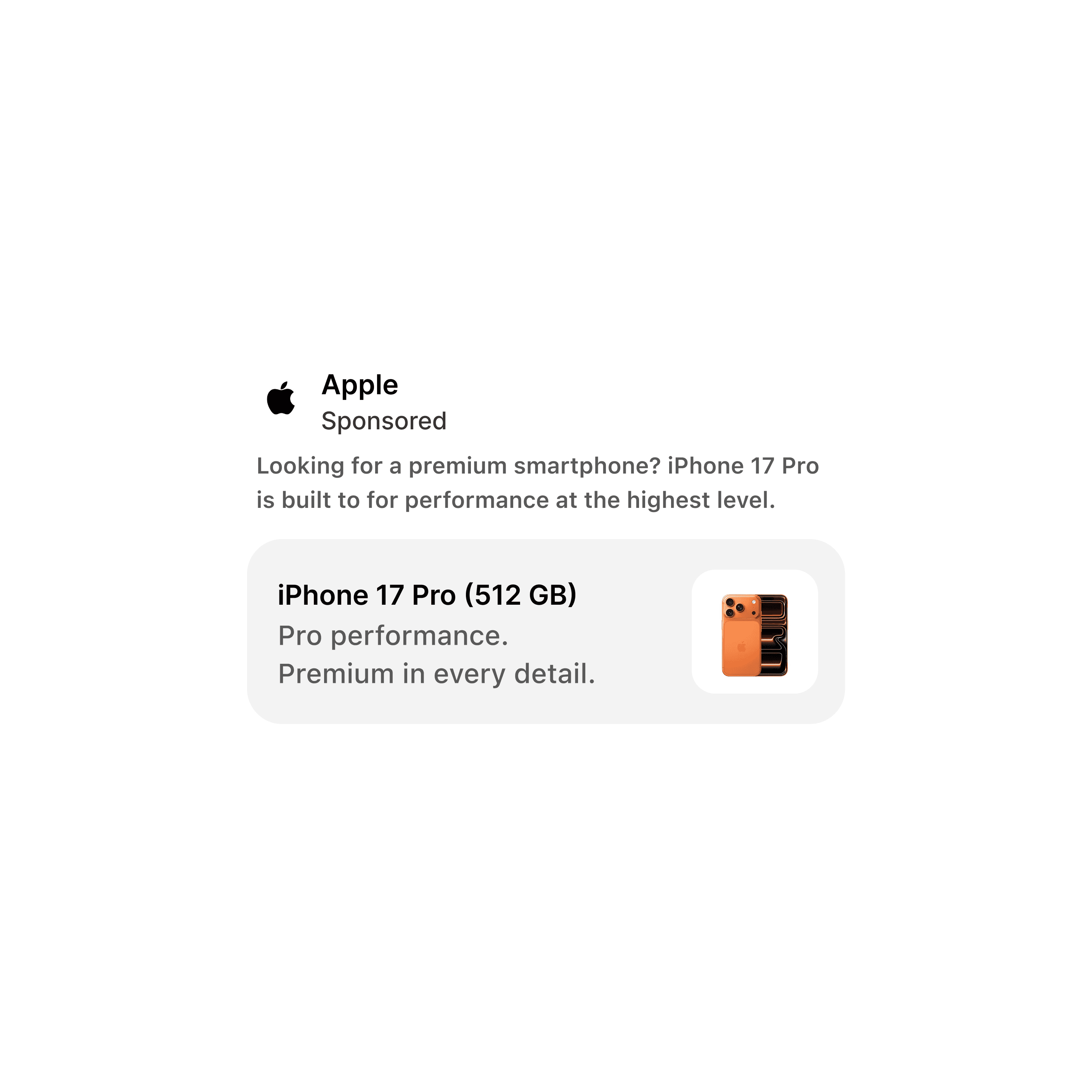
Search behavior is changing. Instead of browsing through multiple websites or comparing endless tabs, users are increasingly turning to AI to ask direct questions and get structured answers.
Inside ChatGPT, decisions are no longer scattered across different platforms — they are being shaped in a single conversation. Whether someone is choosing a course, comparing software, or evaluating products, the process is becoming more guided and efficient.
Now, advertising is entering that environment. Instead of trying to pull users toward a decision, businesses can show up when that decision is already forming. Here’s how ChatGPT Ads actually work, and what that means for customer acquisition.
What Makes ChatGPT Ads Different
ChatGPT Ads operate on a fundamentally different model compared to traditional advertising platforms.
On Google, advertisers compete for keywords. On Meta, they compete for attention. In both cases, the goal is to influence a user before a decision is fully formed.
Inside ChatGPT, the dynamic shifts. The user is already asking specific questions and evaluating options. Ads are introduced within that context, making them part of the decision rather than a distraction from it.
This means ChatGPT Ads are not driven by visibility alone, but by relevance to intent. The ad works not because it is seen, but because it aligns with what the user is already trying to solve.
Where ChatGPT Ads Appear
ChatGPT Ads are designed to appear naturally within the conversation flow.
They can show up:
after a set of recommendations
within responses where options are being compared
alongside content that helps the user evaluate choices
The placement is not random. It is tied to moments where the user is moving closer to a decision. This makes the ad feel less like an interruption and more like an extension of the response.
This is also why placement matters more than frequency. Showing up at the right moment has a greater impact than showing up repeatedly.
How Targeting Works
Targeting in ChatGPT Ads is based on understanding intent rather than selecting keywords or audience segments.
Instead of asking “who should see this ad?”, the question becomes “when should this ad appear?”
There are three core elements that define this:
Query intent — what the user is trying to achieve or decide
Context — where they are in the decision process
Relevance — how well the ad aligns with that moment
For example, someone asking “best data science courses for beginners” is at a different stage than someone asking “which data science course should I choose between X and Y.” The second query represents a stronger decision signal, and ads placed there are more likely to convert.
This makes targeting more intuitive, but also more precise. It requires understanding behavior, not just data points.
How Businesses Actually Use ChatGPT Ads
Businesses use ChatGPT Ads to capture demand that already exists, rather than trying to create it from scratch.
The most common use cases include:
entering comparison moments where users are evaluating options
capturing high-intent queries where a decision is close
positioning their product as a relevant choice within that context
For example, an e-learning platform can appear when a user is comparing courses. A SaaS company can show up when tools are being evaluated. A consumer brand can position itself when product recommendations are being discussed.
In each case, the ad works because it fits into the decision already in progress.
What Makes a ChatGPT Ad Perform Well
Performance in ChatGPT Ads is not driven by aggressive messaging or broad targeting. It comes down to alignment.
The most effective ads share a few common traits:
they match the user’s intent directly
they are clear and easy to understand
they appear at the right moment in the conversation
An ad that is perfectly aligned with intent will often outperform one that is simply more creative or visually appealing. This is because the user is not being convinced — they are being guided toward a choice.
This is where most of the performance gains come from.
Why Most Businesses Will Get This Wrong
Despite the opportunity, many businesses will approach ChatGPT Ads using outdated thinking.
They will treat it like search by focusing on keywords, or like social media by focusing on creatives and targeting audiences. In doing so, they will miss the core principle of this channel — that it is driven by decision-stage intent.
Common mistakes will include:
writing generic ad copy that does not match the conversation
placing ads without understanding the user’s decision stage
optimizing for impressions instead of conversions
These mistakes won’t just reduce performance — they will make the channel appear ineffective, even when the underlying opportunity is strong.
Where Flow Fits In
This is where a more structured approach becomes necessary.
Flow focuses specifically on how decisions are formed inside ChatGPT and builds advertising strategies around those moments. Instead of adapting traditional ad models, the approach is designed from the ground up for conversational environments.
This includes identifying high-intent queries, aligning messaging with user intent, and running campaigns that convert at the point of decision. For businesses that want to understand how this works in practice, you can explore how Flow approaches this through its ChatGPT Ads services, where the focus is on turning conversation-level intent into measurable acquisition outcomes.
Early Advantage Businesses Should Leverage
Like any new acquisition channel, timing plays a significant role.
Right now, ChatGPT Ads are still in an early stage. This means lower competition, more room for experimentation, and better efficiency for businesses that move quickly.
Over time, as more companies enter the space, costs will rise and performance will depend more on experience and optimization. Businesses that start early will be in a stronger position when that shift happens.
Final Thoughts
ChatGPT Ads represent a shift from attention-based advertising to intent-based advertising.
Instead of trying to influence users before they decide, businesses can now be present when decisions are actively being made. This changes not just where ads appear, but how they need to be created and managed.
For companies that rely on customer acquisition, this is not just another channel — it is a different way of thinking about advertising altogether.
Conclusion
If you want to see how this applies to your business and where your brand can show up inside ChatGPT conversations, it may be worth taking a closer look.
Flow offers a ChatGPT Ads Audit that breaks down how decisions are being formed in your category and where the opportunity exists to capture high-intent demand more efficiently.
Similar Blogs

Prepare Your Business for Advertising Inside AI Platforms
If your organization is exploring how AI platforms may influence customer acquisition, the AI Ads Readiness Program helps you understand where your brand stands today — and how to prepare for where advertising inside AI systems is going.